2026-08-27 ·
Septic-to-Sewer Programs in Volusia County: What They Mean for Your Home in 2026
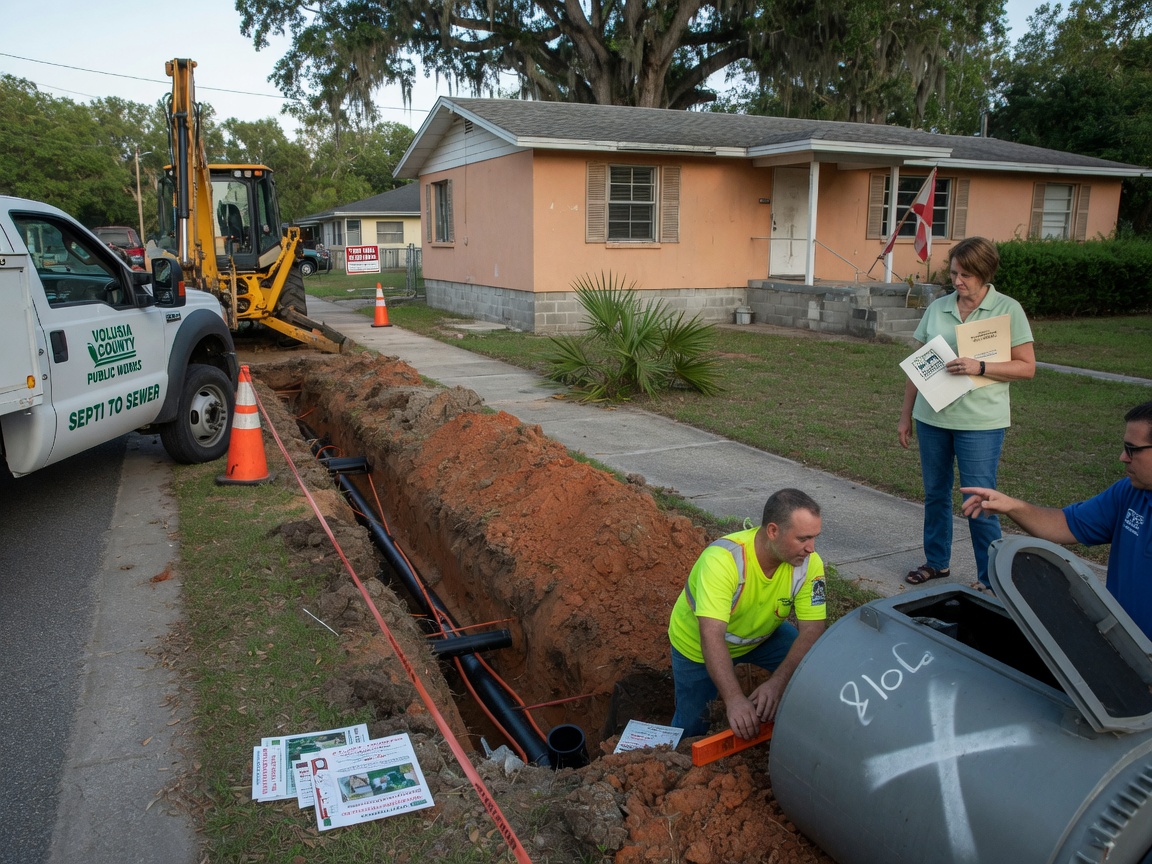
Septic-to-sewer programs in Volusia County shift eligible homes in Orange City from on-site tanks to municipal sewer connections, often requiring new lateral lines and inspections that tie directly into existing drain infrastructure.
How County Programs Affect Orange City Properties
Homes in the Orange City Historic District and nearby Enterprise often sit on older septic setups installed decades ago amid the area's sandy soils and mild winters. Conversion programs typically target neighborhoods where sewer mains already run along main roads, allowing property owners to abandon tanks once connections are approved. In Volusia County's humid subtropical climate, summer rains can saturate ground around septic fields, increasing backup risks that sewer ties can eliminate. Properties near Blue Spring State Park face additional terrain considerations because of fluctuating water tables that influence how new sewer laterals must be trenched. Homeowners in these zones should map existing septic locations before any work begins to avoid conflicts with nearby utilities.
Steps Involved in a Typical Transition
County processes usually begin with eligibility checks based on proximity to existing sewer mains in areas like Deltona and DeLand. Next comes permitting, followed by excavation for the new service line that runs from the house to the street connection. During this phase, plumbers often use sewer camera inspection to verify the condition of interior drain lines before final tie-in. After the county inspects the new lateral, the old tank is pumped out, crushed or filled, and the site is restored. In Enterprise, where some homes sit on larger lots, the distance from house to main can extend the trenching work and affect landscaping around mature trees.
Plumbing Realities for Drain and Sewer Lines
Once connected, homes gain access to the county system, which changes how clogs and backups are handled compared with septic maintenance. Older drain lines in Orange City housing stock can still collect grease and debris, making regular hydro jetting useful for keeping flows clear. The shift also reduces the need for septic tank pumping but increases reliance on the municipal line's capacity during heavy rain events common in the region. Properties transitioning near DeLand may notice differences in water pressure and flow that affect garbage disposal performance downstream. Local operators often recommend checking cleanouts at the property line before and after the switch to confirm no debris entered during construction.
Long-Term Considerations for 2026
By 2026, completed conversions in Volusia County should lower the chance of septic-related backups in converted Orange City neighborhoods, though interior drain issues from hard water or seasonal debris remain possible. Owners in the historic district may need to coordinate with preservation guidelines when routing new lines around older foundations. Linking to county records helps track which streets have already been extended, guiding decisions for homes still on septic near Lake Helen or Cassadaga. Regular sewer camera inspection after connection provides a record of line condition that proves useful for future repairs or property sales.
Related Resources for Homeowners
Reviewing Florida's hard water effects on drains helps Orange City residents understand ongoing maintenance even after sewer conversion. Summer storm preparedness remains relevant because heavy rains can still overwhelm municipal lines in low-lying Enterprise sections. For properties in Deltona considering the switch, checking current main extensions through county planning documents offers the clearest timeline for 2026 eligibility.